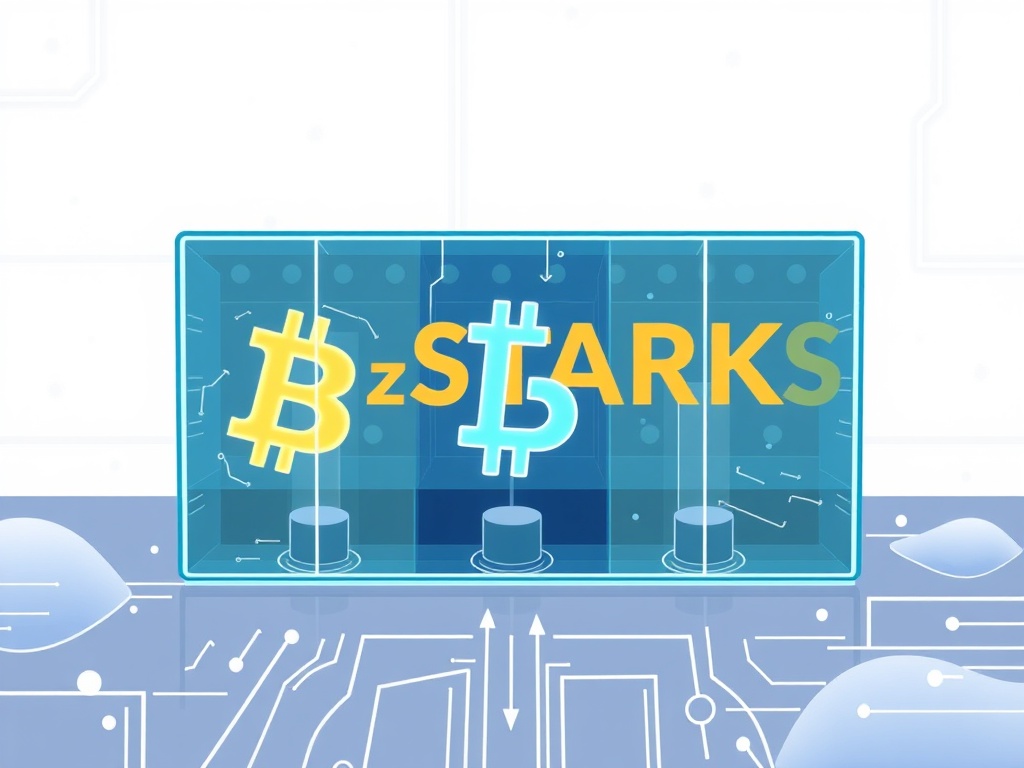
Understanding Mina Protocol Privacy: A Deep Dive into ZK-SNARKs and Decentralized Confidentiality

Understanding Mina Protocol Privacy: A Deep Dive into ZK-SNARKs and Decentralized Confidentiality
In the rapidly evolving landscape of blockchain technology, privacy has emerged as a cornerstone of user trust and adoption. Among the innovative solutions addressing this need, the Mina protocol stands out with its unique approach to privacy through zero-knowledge proofs. Unlike traditional blockchains that often sacrifice scalability for transparency, Mina protocol privacy leverages cutting-edge cryptographic techniques to deliver both confidentiality and efficiency. This article explores the intricate mechanisms behind Mina protocol privacy, its architectural advantages, and its implications for the future of decentralized systems.
The Mina protocol, often referred to as the world’s lightest blockchain, redefines the boundaries of privacy and performance in decentralized networks. By utilizing ZK-SNARKs (Zero-Knowledge Succinct Non-Interactive Arguments of Knowledge), Mina ensures that transactions remain private while maintaining the integrity and security of the network. This balance is achieved without the need for trusted setups or excessive computational overhead, making it a compelling choice for privacy-conscious users and developers alike.
In this comprehensive guide, we will dissect the core components of Mina protocol privacy, examine its real-world applications, and compare it with other privacy-focused blockchains. Whether you are a developer, investor, or simply a blockchain enthusiast, understanding the nuances of Mina’s privacy features will provide valuable insights into its potential to revolutionize the industry.
---The Evolution of Privacy in Blockchain Technology
The Limitations of Traditional Blockchains
Blockchain technology, since its inception with Bitcoin, has been celebrated for its transparency and immutability. However, these very features often come at the cost of privacy. In public blockchains like Bitcoin and Ethereum, every transaction is recorded on a ledger that is visible to all participants. While addresses are pseudonymous, sophisticated analysis techniques can deanonymize users by linking transactions to real-world identities.
This lack of inherent privacy has led to the development of privacy-focused cryptocurrencies such as Monero, Zcash, and Dash. These projects employ various techniques, including ring signatures, stealth addresses, and zk-SNARKs, to obscure transaction details. However, many of these solutions introduce significant computational overhead or rely on trusted setups, which can undermine their security guarantees.
The Rise of Zero-Knowledge Proofs in Privacy Solutions
Zero-knowledge proofs (ZKPs) have emerged as a powerful tool for enhancing privacy in blockchain systems. A zero-knowledge proof allows one party (the prover) to convince another party (the verifier) that a statement is true without revealing any additional information beyond the validity of the statement itself. This property makes ZKPs ideal for privacy-preserving applications.
Among the various forms of ZKPs, zk-SNARKs (Zero-Knowledge Succinct Non-Interactive Arguments of Knowledge) have gained prominence due to their efficiency and non-interactivity. Unlike interactive proofs, zk-SNARKs do not require back-and-forth communication between the prover and verifier, making them suitable for blockchain environments where scalability is critical.
The Mina protocol harnesses the power of zk-SNARKs to create a privacy-preserving blockchain that is both lightweight and secure. By embedding zk-SNARKs directly into its protocol, Mina achieves a level of privacy that is unparalleled in traditional blockchains while maintaining the efficiency required for real-world adoption.
Why Mina Protocol Privacy Stands Out
Unlike other privacy-focused blockchains that rely on complex cryptographic techniques or trusted setups, the Mina protocol privacy model is designed to be both elegant and robust. Here are some key differentiators:
- Lightweight Design: Mina’s blockchain is only 22 kilobytes in size, making it the smallest blockchain in the world. This minimal footprint is achieved through recursive zk-SNARKs, which compress the entire blockchain state into a single proof.
- No Trusted Setup: Many zk-SNARK-based systems require a trusted setup phase, which can introduce vulnerabilities if compromised. Mina eliminates this risk by using a transparent setup process, ensuring that no single entity can compromise the system’s integrity.
- Scalability: Traditional blockchains often struggle with scalability due to the need to store and verify every transaction. Mina’s use of zk-SNARKs allows it to process transactions efficiently without sacrificing privacy.
- Interoperability: Mina is designed to be interoperable with other blockchains, enabling users to leverage its privacy features across multiple ecosystems.
These advantages position the Mina protocol privacy solution as a game-changer in the quest for scalable, private, and decentralized blockchain systems.
---How Mina Protocol Privacy Works: A Technical Breakdown
The Role of zk-SNARKs in Mina Protocol
At the heart of Mina protocol privacy lies the zk-SNARK, a cryptographic primitive that enables verifiable computation without revealing the underlying data. In Mina, zk-SNARKs are used to create succinct proofs that validate the state of the blockchain without exposing sensitive information.
The process begins with the generation of a zk-SNARK proof. This proof attests to the validity of a transaction or state transition without disclosing the transaction details. For example, if Alice sends Mina tokens to Bob, the zk-SNARK proof confirms that the transaction is valid (i.e., Alice has sufficient funds and the transaction is correctly signed) without revealing the sender, recipient, or amount involved.
These proofs are then added to the blockchain, where they are verified by network participants. Because zk-SNARKs are succinct (typically a few hundred bytes in size), they can be efficiently verified, even by lightweight nodes. This ensures that the Mina protocol privacy mechanism does not compromise the network’s scalability.
Recursive Composition: The Secret Behind Mina’s Lightweight Blockchain
One of the most innovative aspects of Mina’s design is its use of recursive zk-SNARKs. In traditional blockchain systems, each block contains a list of transactions that must be stored and verified. This leads to a linear growth in blockchain size over time, which can become unwieldy for lightweight clients.
Mina solves this problem by using recursive composition. Instead of storing every transaction individually, Mina compresses the entire blockchain state into a single zk-SNARK proof. This proof, known as the succinct blockchain proof, attests to the validity of the entire chain up to the current block. As new blocks are added, the proof is updated recursively, ensuring that the blockchain remains compact and efficient.
This approach has profound implications for Mina protocol privacy. By compressing the blockchain state into a single proof, Mina ensures that privacy is maintained without sacrificing performance. Users can verify the entire blockchain’s integrity without needing to store or process the entire transaction history, making it ideal for privacy-conscious applications.
Consensus Mechanism: Ouroboros Samasika and Privacy
Mina’s consensus mechanism, Ouroboros Samasika, is a proof-of-stake (PoS) algorithm designed to be both secure and efficient. Unlike traditional PoS systems that require validators to store the entire blockchain, Ouroboros Samasika leverages Mina’s recursive zk-SNARKs to validate the blockchain state without needing to access the full transaction history.
This design choice enhances Mina protocol privacy in several ways:
- Reduced Attack Surface: Because validators do not need to store the entire blockchain, the attack surface for potential exploits is significantly reduced. This makes it harder for malicious actors to compromise the network.
- Enhanced Scalability: The lightweight nature of Mina’s blockchain allows it to process transactions more efficiently, reducing congestion and improving throughput.
- Privacy-Preserving Validation: Validators can verify the blockchain’s state without accessing sensitive transaction data, ensuring that user privacy is preserved even during the consensus process.
Ouroboros Samasika’s integration with zk-SNARKs exemplifies how Mina protocol privacy is woven into every layer of the protocol, from transaction validation to consensus.
Transaction Privacy: How zk-SNARKs Obscure Sensitive Data
In a traditional blockchain, transactions are publicly visible, and while addresses may be pseudonymous, they can often be linked to real-world identities through analysis. Mina’s use of zk-SNARKs changes this paradigm by ensuring that transaction details remain completely private.
Here’s how it works:
- Transaction Creation: When a user initiates a transaction, the details (sender, recipient, amount) are encoded into a zk-SNARK proof. This proof attests to the validity of the transaction without revealing the underlying data.
- Proof Generation: The zk-SNARK proof is generated using a secret witness (the transaction details) and a public statement (the transaction’s validity). The proof is then broadcast to the network.
- Verification: Network participants verify the proof using a public verification key. If the proof is valid, the transaction is considered confirmed, and the blockchain state is updated accordingly.
- State Update: The updated state is then compressed into a new zk-SNARK proof, which is added to the blockchain. This recursive process ensures that the blockchain remains compact and private.
This mechanism ensures that Mina protocol privacy is maintained at every stage of the transaction lifecycle. Even if an attacker gains access to the blockchain, they cannot extract sensitive information from the zk-SNARK proofs, as the underlying data remains hidden.
---Comparing Mina Protocol Privacy with Other Privacy Solutions
Mina vs. Monero: Privacy Trade-offs
Monero is widely regarded as the gold standard for privacy in blockchain technology, thanks to its use of ring signatures, stealth addresses, and confidential transactions. These techniques effectively obscure transaction details, making it nearly impossible to trace the flow of funds.
However, Monero’s privacy comes at a cost. The use of ring signatures and confidential transactions introduces significant computational overhead, which can slow down transaction processing and increase fees. Additionally, Monero’s blockchain size grows linearly over time, making it less scalable for lightweight clients.
In contrast, Mina protocol privacy offers a more scalable and efficient solution. By leveraging zk-SNARKs, Mina achieves privacy without the computational burden of Monero’s techniques. Furthermore, Mina’s recursive blockchain design ensures that the blockchain remains compact, making it ideal for lightweight clients and high-throughput applications.
While Monero excels in absolute privacy, Mina provides a balanced approach that prioritizes both privacy and scalability. For users who require a lightweight, efficient, and private blockchain, Mina is a compelling alternative.
Mina vs. Zcash: Trusted Setups and Usability
Zcash is another prominent privacy-focused blockchain that utilizes zk-SNARKs to obscure transaction details. However, Zcash’s reliance on a trusted setup phase has been a point of contention. During the trusted setup, a group of participants generates cryptographic parameters that are used to create and verify zk-SNARKs. If these parameters are compromised, the entire system’s privacy guarantees could be undermined.
Mina addresses this issue by using a transparent setup process. Instead of relying on a trusted group, Mina’s zk-SNARK parameters are generated in a way that does not require secrecy. This eliminates the risk of a single point of failure and enhances the overall security of the Mina protocol privacy model.
Additionally, Zcash offers two types of transactions: transparent (public) and shielded (private). While shielded transactions provide strong privacy guarantees, they are computationally expensive and may not be suitable for all use cases. Mina, on the other hand, ensures privacy for all transactions by default, making it more user-friendly and accessible.
Mina vs. Ethereum Privacy Solutions: zk-Rollups and Beyond
Ethereum, the world’s largest smart contract platform, has seen a surge in privacy-focused solutions, particularly zk-rollups. zk-rollups are layer-2 scaling solutions that use zk-SNARKs to bundle multiple transactions into a single proof, which is then submitted to the Ethereum mainnet. This approach enhances privacy and scalability but introduces additional complexity.
While zk-rollups offer a powerful way to achieve privacy on Ethereum, they are not natively integrated into the base layer. Users must rely on third-party rollup providers, which can introduce centralization risks and additional trust assumptions. In contrast, Mina protocol privacy is built into the protocol itself, ensuring that privacy is a core feature rather than an add-on.
Moreover, Mina’s lightweight design allows it to operate as a standalone blockchain, whereas zk-rollups are dependent on the Ethereum mainnet for security. This independence gives Mina greater flexibility and reduces its reliance on external systems.
Mina vs. Dash: InstantSend and PrivateSend
Dash, a privacy-focused cryptocurrency, offers two key features: PrivateSend and InstantSend. PrivateSend uses a mixing protocol to obscure transaction origins, while InstantSend enables near-instant transaction confirmation. However, Dash’s privacy model relies on a centralized masternode network, which can introduce centralization risks.
Mina’s protocol privacy model, on the other hand, is fully decentralized. By leveraging zk-SNARKs and a proof-of-stake consensus mechanism, Mina ensures that privacy is maintained without relying on trusted intermediaries. This decentralized approach enhances security and censorship resistance, making it a more robust solution for privacy-conscious users.
---Real-World Applications of Mina Protocol Privacy
Decentralized Finance (DeFi) and Private Transactions
The rise of decentralized finance (DeFi) has brought financial services to the blockchain, but it has also highlighted the need for privacy. In traditional DeFi applications, transaction histories are publicly visible, which can expose users to risks such as front-running, censorship, or targeted attacks.
Mina’s protocol privacy features make it an ideal platform for DeFi applications that require confidentiality. For example, decentralized exchanges (DEXs) built on Mina can offer private trading, where users can swap assets without revealing their transaction history. This enhances user privacy and reduces the risk of market manipulation.
Additionally, lending and borrowing platforms can leverage Mina’s privacy features to protect borrowers’ identities and transaction details. This is particularly important in regions where financial privacy is highly valued or where users may face discrimination based on their financial activities.
Enterprise Blockchain Solutions
Enterprises are increasingly exploring blockchain technology for supply chain management, identity verification, and secure data sharing. However, many of these use cases require privacy to protect sensitive business information.
Mina’s protocol privacy model offers a compelling solution for enterprises. By using zk-SNARKs, enterprises can verify the validity of transactions or data without exposing the underlying details. For example, a supply chain platform built on Mina can prove that a product was sourced ethically without revealing the identities of the suppliers or the specific locations involved.
This level of privacy is difficult to achieve with traditional blockchains, where transaction data is publicly visible. Mina’s ability to provide verifiable privacy makes it an attractive option for enterprises looking to adopt blockchain technology without compromising confidentiality.
Identity Management and Self-Sovereign Identity
Identity management is another area where Mina protocol privacy can have a significant impact. Traditional identity systems often rely on centralized authorities, which can be vulnerable to breaches or misuse. Self-sovereign identity (SSI) solutions aim to give users control over their personal data, but many existing SSI systems struggle with scalability and privacy.
Mina’s zk-SNARK-based approach enables users to prove their identity or credentials without revealing the underlying data. For example, a user could prove that they are over 18 years old without disclosing their exact birthdate or other personal details. This enhances privacy while still allowing for secure verification.
Additionally, Mina’s lightweight design makes it suitable for mobile and IoT applications, where users may need to verify their identity on resource-constrained devices. This opens up new possibilities for privacy-preserving identity solutions in sectors such as healthcare, finance, and government.
Gaming and NFTs: Privacy in Digital Ownership
The gaming and non-fungible token (NFT) industries have seen explosive growth, but they also face challenges related to privacy and ownership. In many gaming ecosystems, players’ in-game assets and transactions are publicly visible, which can expose them to risks such as theft or targeted advertising.
Mina’s protocol privacy features can be leveraged to create private gaming environments where players can trade assets, participate in tournaments, and interact with the game without revealing their identities or transaction histories. This enhances user experience and protects players from potential risks.
Similarly, NFT marketplaces built on Mina can offer private transactions, allowing users to buy, sell, or trade digital assets without exposing their ownership history. This is particularly valuable for high-value NFTs, where privacy can be a significant concern.
---Challenges and Future Directions for Mina Protocol Privacy
Adoption and Awareness
Despite its innovative features, Mina protocol privacy is still relatively new, and many users and developers are not fully aware of its capabilities. Increasing adoption will require education and outreach efforts

Mina Protocol Privacy: A Breakthrough in Zero-Knowledge Proofs for Blockchain Confidentiality
As the Blockchain Research Director with over eight years in distributed ledger technology, I’ve closely monitored the evolution of privacy-preserving mechanisms in decentralized systems. Mina Protocol stands out in this landscape by leveraging zk-SNARKs to achieve Mina protocol privacy without sacrificing scalability—a critical trade-off that has long plagued privacy-focused blockchains. Unlike traditional approaches that rely on complex cryptographic obfuscation or off-chain computation, Mina’s recursive SNARK architecture compresses the entire blockchain state into a single proof, enabling verifiable privacy at scale. This design not only reduces computational overhead but also ensures that sensitive transaction data remains confidential while maintaining full auditability for validators.
From a practical standpoint, Mina Protocol’s privacy model introduces several advantages for enterprise and DeFi applications. For instance, financial institutions can leverage Mina’s zk-SNARKs to execute confidential smart contracts—such as private asset transfers or compliance-ready KYT (Know Your Transaction) flows—without exposing raw data to public ledgers. The protocol’s lightweight design further mitigates the "privacy vs. performance" dilemma, as its succinct blockchain structure eliminates the need for resource-intensive state bloat. However, challenges remain in key management and interoperability with other privacy solutions, which will require standardized cross-chain protocols to ensure seamless adoption. As privacy regulations tighten globally, Mina’s approach offers a compelling blueprint for balancing transparency, security, and confidentiality in next-generation blockchain ecosystems.